Battery Energy Storage Systems (BESS) are becoming an important part of modern power infrastructure, supporting renewable integration, peak demand management, grid stability, backup power and energy shifting. But before a BESS can charge, discharge or interact with the electrical grid, engineers have to establish that the system is installed correctly, communicating correctly and capable of responding safely.
The first 24 hours of BESS commissioning are therefore not simply about “switching the battery on.” They are about systematically verifying the battery system, Power Conversion System (PCS), Battery Management System (BMS), Energy Management System (EMS), protection systems, cooling, fire safety and communications before energization.
Industry guidance describes commissioning as a structured process of testing, recording and validating component and system performance before operational release.
Here is what that process typically looks like.
The first step is surprisingly basic: engineers inspect what has actually been installed.
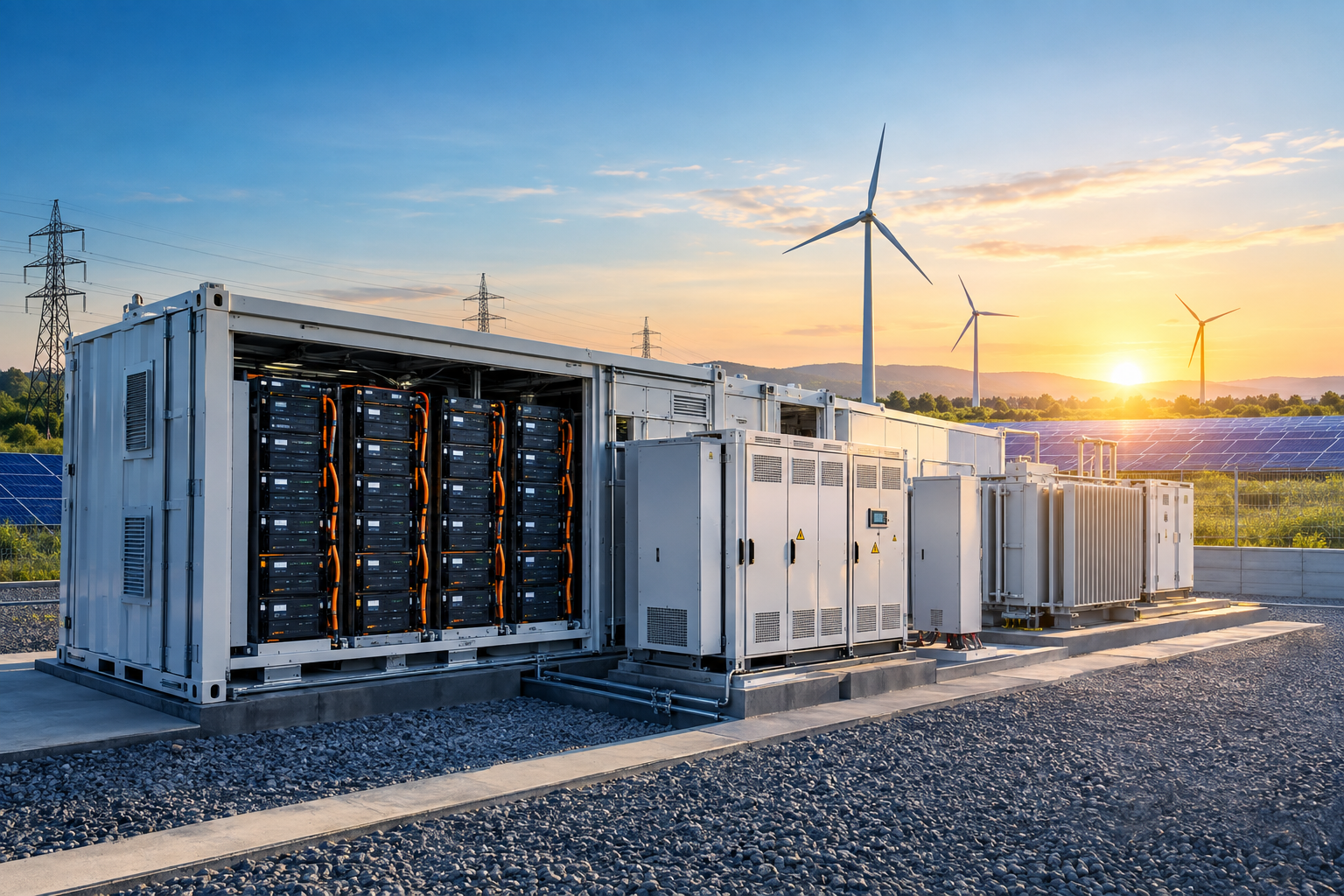
They verify battery racks or containers, PCS equipment, switchgear, transformers, auxiliary systems, HVAC or liquid cooling equipment, cable terminations, grounding connections, labels and emergency equipment.
Mechanical completion is checked against approved drawings and installation documentation.
Typical checks include:
This stage matters because a BESS can have perfectly functioning batteries while still having an installation problem elsewhere in the electrical system.
BC Hydro's BESS commissioning guidance similarly separates mechanical checks, external safety systems and cold commissioning before grid energization.
Once the physical installation is verified, engineers move to electrical testing.
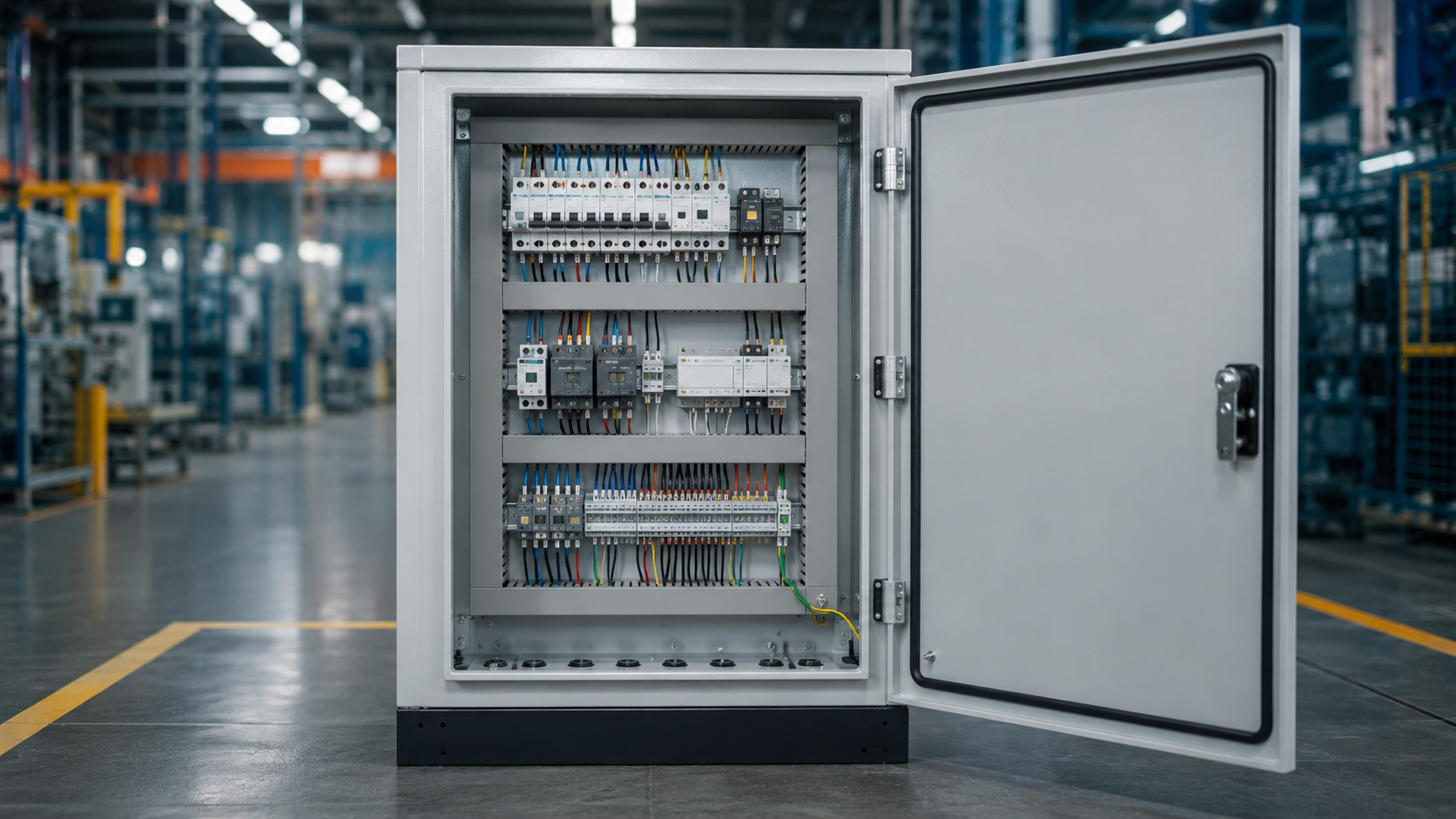
This can include insulation resistance testing, grounding continuity, polarity verification, phase sequence, cable checks and protection-system verification.
For a grid-connected BESS, protection settings are particularly important.
Engineers may verify:
The objective is straightforward: if something abnormal happens, the system must respond according to the approved protection philosophy.
The UK government's guidance for grid-scale energy storage specifically identifies BMS functionality, inverter protection, control hierarchy and site-level functional testing as important parts of commissioning.
The Battery Management System is one of the most important checkpoints.
Before energization, engineers need confidence that the BMS can accurately monitor and protect the battery.
They examine parameters such as:
State of Charge (SOC)
How much energy is currently stored.
State of Health (SOH)
An indication of the battery's condition relative to its original performance.
Cell voltage
Helps identify abnormal cells or imbalance.
Temperature
Ensures cells and modules are operating within permitted limits.
Voltage and temperature spread
Large deviations can indicate potential problems requiring investigation.
The BMS should also communicate correctly with higher-level controllers.
A typical communication chain looks like:
Cell → Module BMS → Rack BMS → Container Controller → PCS → EMS/SCADA
A failure anywhere in that chain can affect the ability of the BESS to operate correctly.
The Power Conversion System is the bridge between the battery's DC system and the site's AC electrical system.
Engineers therefore verify that the PCS can:
DC → AC: discharge stored energy into the electrical system
AC → DC: charge the battery from the grid or another AC source
PCS commissioning includes checking synchronization, operating limits, protection functions, control signals and communication with the BMS and EMS.
For example, Schneider Electric's current BESS PCU documentation covers installation, commissioning, protection, communications and grid-connected operation for bidirectional power conversion equipment.
The important point is that a PCS passing an isolated equipment test does not automatically prove that the complete BESS will respond correctly once integrated.
A BESS is more than batteries and inverters.
The Energy Management System determines how the system should operate according to the application's objectives.
For example:
Peak shaving:
Discharge when facility demand approaches a defined threshold.
Renewable energy shifting:
Charge when solar generation is available and discharge later.
Grid support:
Respond to frequency or voltage requirements.
Backup:
Maintain defined reserve capacity for critical loads.
During commissioning, engineers verify that commands issued by the EMS reach the correct equipment and that feedback returns correctly through SCADA.
This is an area where large BESS projects can become complicated because multiple equipment and software vendors have to communicate correctly.
Wärtsilä, for example, has described commissioning tests of its GEMS energy management platform involving load-rejection scenarios such as loss of generation or demand, demonstrating the importance of testing system-level control rather than individual components alone.
Thermal management is another critical checkpoint.
Depending on the BESS design, engineers may verify HVAC operation, cooling fans, pumps, coolant circuits, temperature sensors and associated alarms.
Why?
Because a battery can appear normal during a short static test but behave differently when operating at significant charge or discharge power.
Engineers monitor:
For liquid-cooled systems, the commissioning process can additionally involve checking coolant flow, pressure, temperature and CDU or cooling-loop operation.
The objective is to establish a controlled thermal environment before sustained operation.
BESS commissioning also extends beyond electrical equipment.
Engineers verify the interaction between the battery system and safety systems such as:
The UK government notes that commissioning should include robustness testing under abnormal conditions such as loss of grid, cooling or communications, including appropriate shutdown, restart and alarm behaviour.
The objective is not simply to prove that an alarm appears on a screen. Engineers need to verify what the system actually does when the alarm condition occurs.
Only after the required pre-energization checks are complete does the project move toward controlled energization.
This is typically a carefully sequenced activity involving the electrical utility, EPC team, BESS integrator, OEM and commissioning engineers.
The sequence can involve:
Auxiliary power → control systems → PCS → AC system → battery DC system → controlled charge/discharge
Every step has defined conditions and hold points.
A useful real-world example is Wärtsilä's 150 MW/300 MWh Bungama BESS in South Australia. The project progressed through three commissioning hold-point tests before reaching commercial operation under Australian Energy Market Operator (AEMO) requirements.
That illustrates an important principle: commissioning is often a staged process rather than one single “energization day.”
Once the system is energized, engineers begin controlled functional testing.
They may verify:
Performance data is recorded to create a commissioning baseline.
That baseline becomes valuable later when evaluating degradation, troubleshooting abnormal behaviour or assessing performance against contractual requirements.
The importance of commissioning documentation is also reflected in EPRI's Energy Storage Commissioning Guide, which includes commissioning considerations across planning, procurement, deployment, integration and operations.
Large projects demonstrate why commissioning cannot be reduced to a simple equipment checklist.
At the Eraring BESS in Australia, Wärtsilä and Origin are developing a 700 MW / 3,160 MWh system in multiple stages. The first stage reached the final phase of commissioning in December 2025, with 460 MW brought online.
Similarly, Fluence commissioned two 20 MW / 20 MWh battery systems for San Miguel Corporation Global Power Holdings in the Philippines in 2021, as part of a larger 470 MW / 470 MWh portfolio.
And in a documented Tesla Megapack project filing in California, the commissioning process was described as involving approximately eight hours per Megapack block, with testing including visual inspection, electrical connections and SCADA communication checks.
These projects differ significantly in scale and technology, but the underlying principle remains consistent:
Before a BESS becomes an operating asset, its electrical, thermal, control, communication and safety systems have to work together—not merely work individually.
A successful BESS commissioning process produces more than a system that turns on.
It produces evidence.
Evidence that:
This is why commissioning should be treated as an engineering validation process rather than the final step of installation.
As BESS deployment expands across renewable energy, industrial facilities, utilities and critical infrastructure, the quality of commissioning will increasingly influence the reliability and long-term performance of the entire energy-storage asset. India's Central Electricity Authority is also tracking the country's growing BESS deployment through its BESS Implementation and Monitoring System.
1. What is BESS commissioning?
BESS commissioning is the systematic testing and validation of the battery, PCS, BMS, EMS, protection, cooling, safety and communication systems before operational handover.
2. What is checked before BESS energization?
Engineers typically verify installation quality, electrical connections, grounding, protection, BMS status, communications, cooling, alarms, fire-safety systems and emergency shutdown functions.
3. What is the difference between cold and hot commissioning?
Cold commissioning generally involves checks before grid energization using auxiliary power. Hot commissioning involves energized system testing, including controlled charge/discharge operation.
4. Why is BMS testing important during commissioning?
The BMS monitors battery parameters such as cell voltage, temperature and SOC and provides protection and control functions. Its communication with the PCS and higher-level controls must be verified.
5. Does a successful BESS commissioning test prove long-term performance?
No. Commissioning establishes that the installed system meets defined operational and performance requirements at the time of testing. Continued monitoring, maintenance and periodic testing are still required.
From battery storage systems and electrical integration to LV/MV infrastructure, protection, control and power distribution, BESS performance depends on how every layer works together.
Brick & Byte provides integrated Electrical, Power, Energy Infra & Digital Infra solutions—from engineering and manufacturing to testing and deployment.
Email: [email protected]
Website: brickandbyte.in