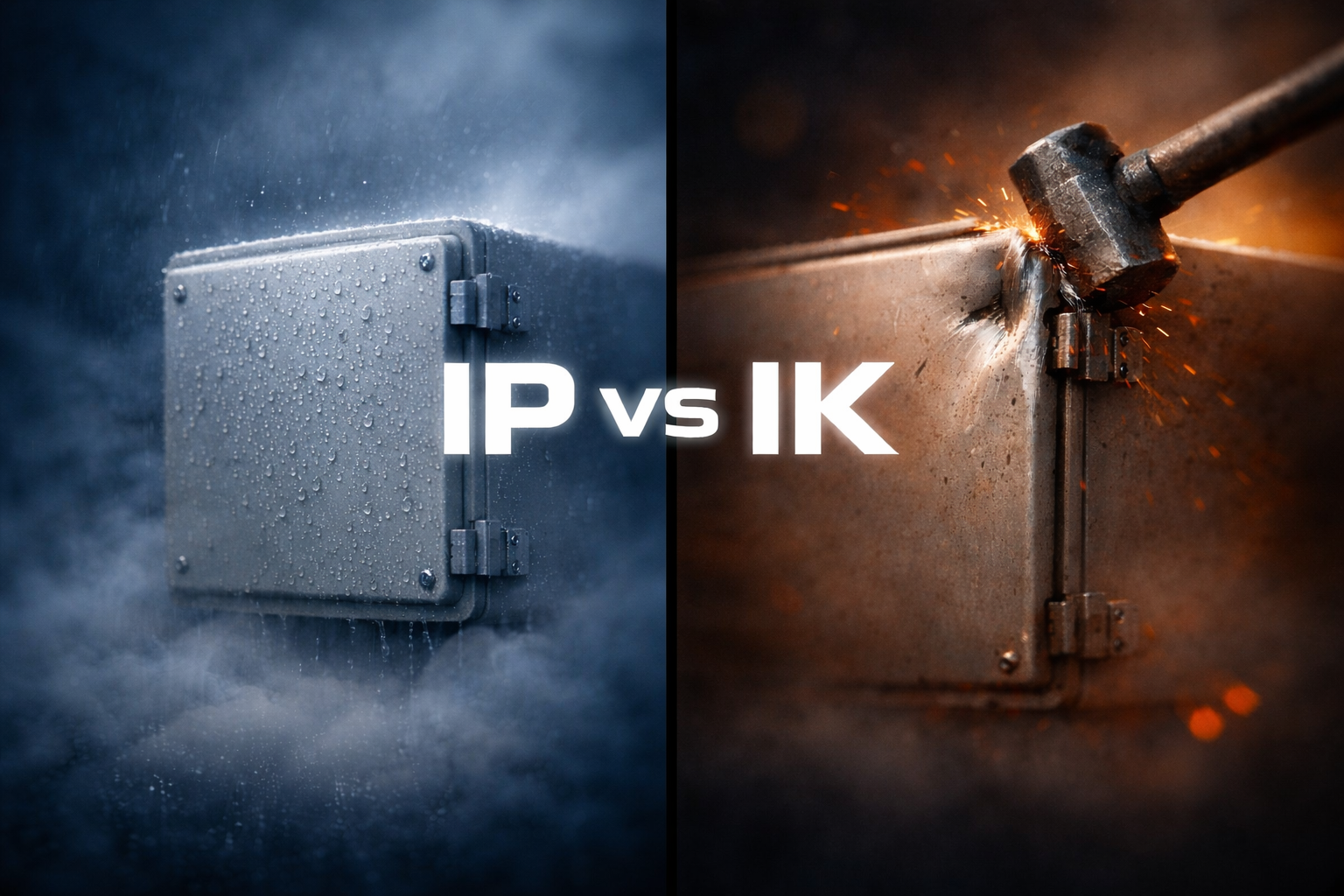
In industrial electrical infrastructure, protection is often simplified to a single metric: IP rating. Engineers, consultants, and procurement teams frequently specify enclosures based on ingress protection alone—IP55, IP65, IP66—assuming that once dust and water are controlled, the system is safe.
But many failures don’t come from dust or water—they come from impact, vibration, and mechanical stress.
This is where IK rating becomes critical.
Ignoring IK ratings creates a hidden mechanical protection gap—one that quietly undermines reliability, especially in modern installations like data centers, renewable plants, metro systems, and heavy industries.
Understanding IP Rating (Ingress Protection)
IP rating is defined under the IEC 60529 ingress protection standard, which classifies the degree of protection provided by enclosures against:
Solid objects (dust, debris)
Liquids (water ingress)
Structure:
First digit: Solid protection (0–6)
Second digit: Liquid protection (0–9)
Example:
IP65
6 → Dust tight
5 → Protection against water jets
Where IP Ratings Excel:
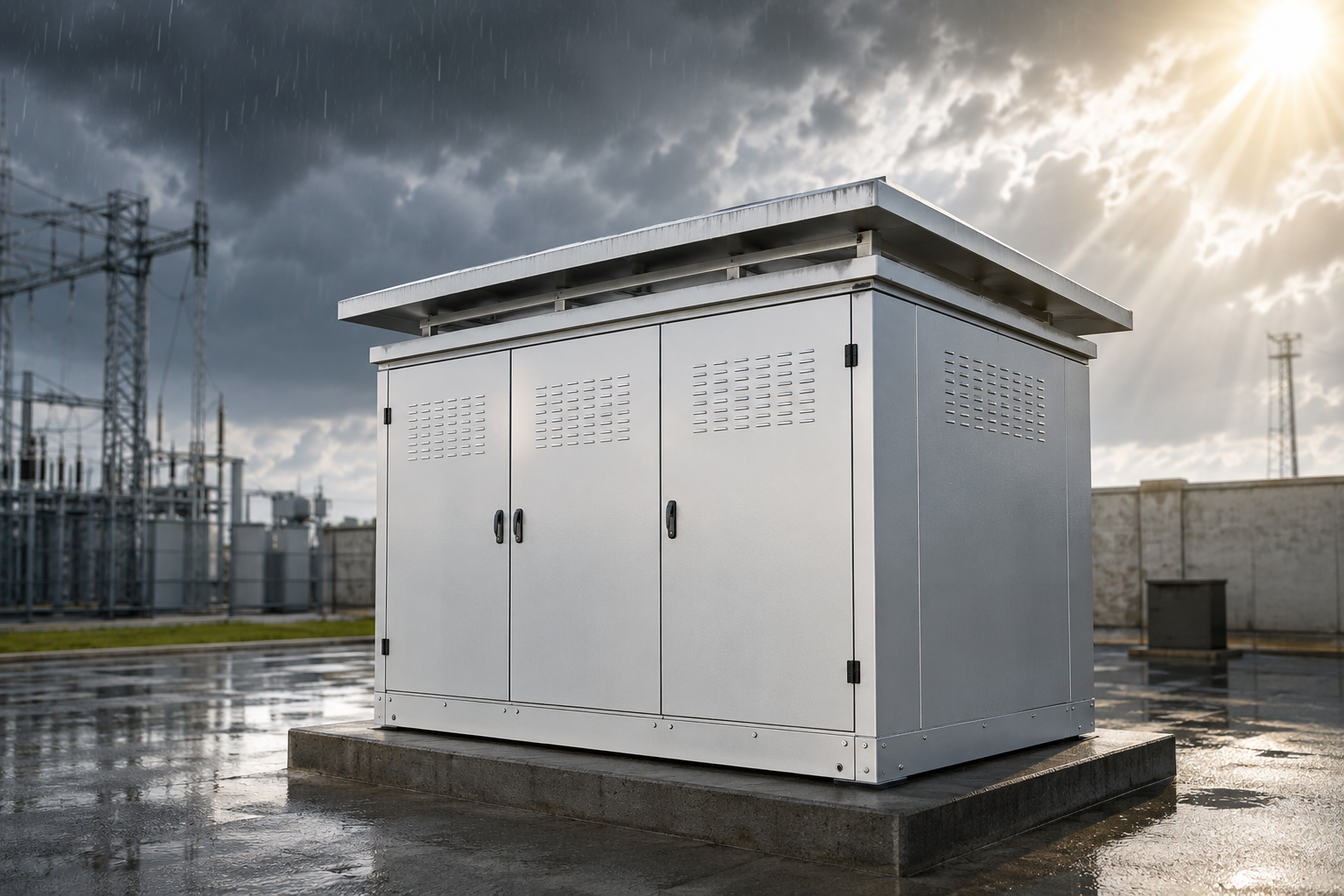
Outdoor panels exposed to rain
Coastal environments with salt-laden air
Dust-heavy industries like cement and mining
Food & pharma washdown zones
But here’s the limitation:
IP ratings do not consider mechanical strength—they say nothing about how the enclosure behaves when:
Hit by tools or machinery
Vibrated continuously
Mishandled during installation
Subjected to accidental impact
Understanding IK Rating (Impact Protection)
IK rating is defined under the IEC 62262 impact protection standard, which measures resistance to mechanical impact.
IK Scale:
Ranges from IK00 (no protection) to IK10 (highest protection)
|
IK Rating |
Impact Energy |
Equivalent Impact |
|
IK06 |
1 Joule |
Small tool drop |
|
IK08 |
5 Joules |
Hand tool impact |
|
IK10 |
20 Joules |
Heavy mechanical strike |
Real Interpretation:
IK08: Suitable for light industrial environments
IK10: Required for harsh, high-risk zones
The Core Problem: The Mechanical Protection Gap
Most specifications read like this:
“Panel shall be IP65, outdoor type.”
But rarely:
“Panel shall be IK10 rated with structural reinforcement.”
This leads to a dangerous mismatch:
Electrical protection is ensured
Mechanical survivability is ignored
Why IP Alone Is Not Enough
1. Installation & Handling Damage
Even before commissioning, panels face:
Forklift impacts
Crate drops
Improper lifting
A high-IP enclosure can still dent, deform, or misalign doors, leading to:
Seal failure
Water ingress post-installation
Locking mechanism issues
2. Vibration-Induced Failures
In industries like:
Oil & gas
Marine
Railways
Heavy manufacturing
Continuous vibration causes:
Fastener loosening
Door misalignment
Micro-cracks in enclosures
IP rating does not evaluate this behavior.
3. Operational Impact Risks
Real-world environments include:
Tools accidentally hitting panels
Cable trays collapsing
Maintenance activity collisions
Without IK rating:
Doors warp
Gaskets fail
Internal components get exposed
4. False Sense of Safety
An IP66 panel gives a false perception of ruggedness.
But IP66 only ensures:
No dust ingress
Protection against powerful water jets
It does not guarantee structural durability.
IP vs IK
|
Parameter |
IP Rating |
IK Rating |
|
Standard |
IEC 60529 ingress protection standard |
IEC 62262 impact protection standard |
|
Focus |
Dust & Water Protection |
Mechanical Impact Resistance |
|
Test Type |
Sealing tests |
Impact energy tests |
|
Failure Mode Covered |
Ingress |
Structural damage |
|
Typical Specification |
Very common |
Rarely specified |
|
Real Risk if Ignored |
Moisture damage |
Physical failure, deformation |
|
Industry Awareness |
High |
Low |
Real-World Failures & Lessons
1. Data Centers — Structural vs Environmental Protection
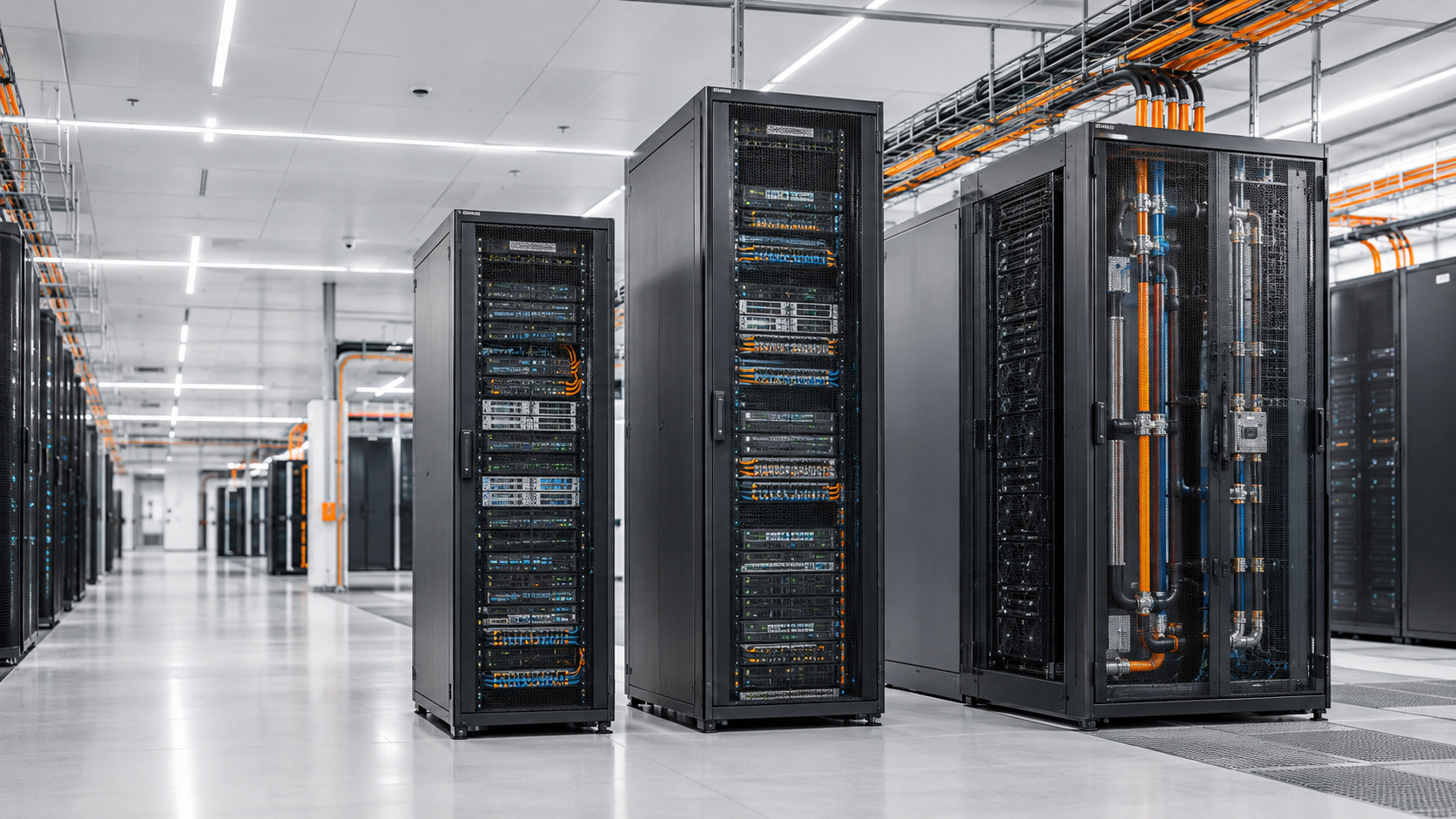
Companies like Schneider Electric Global Energy Management Company and Vertiv Data Center infrastructure company design enclosures for hyperscale data centers.
While IP ratings are moderate (often IP20–IP55 indoors), mechanical robustness is prioritized:
Rack systems designed for load and vibration
Impact-resistant structures for maintenance-heavy environments
Lesson: Controlled environments still need mechanical integrity over ingress protection.
2. Oil & Gas — High IK Requirement Zones
In hazardous installations handled by companies like Siemens global technology company:
Panels are exposed to:
Tool drops
Equipment collisions
Harsh maintenance conditions
Here:
IK10 or higher mechanical strength is critical
Even flameproof enclosures must withstand impact
Lesson: Hazardous zones demand both explosion safety AND mechanical resilience.
3. Rail & Metro Systems
Rail infrastructure projects (often involving players like Alstom rail transport company):
Experience constant vibration
Face public interaction (risk of vandalism)
Panels here require:
IK-rated enclosures to prevent damage
Reinforced mounting systems
Lesson: Dynamic environments amplify the need for IK ratings.
4. Renewable Energy Sites
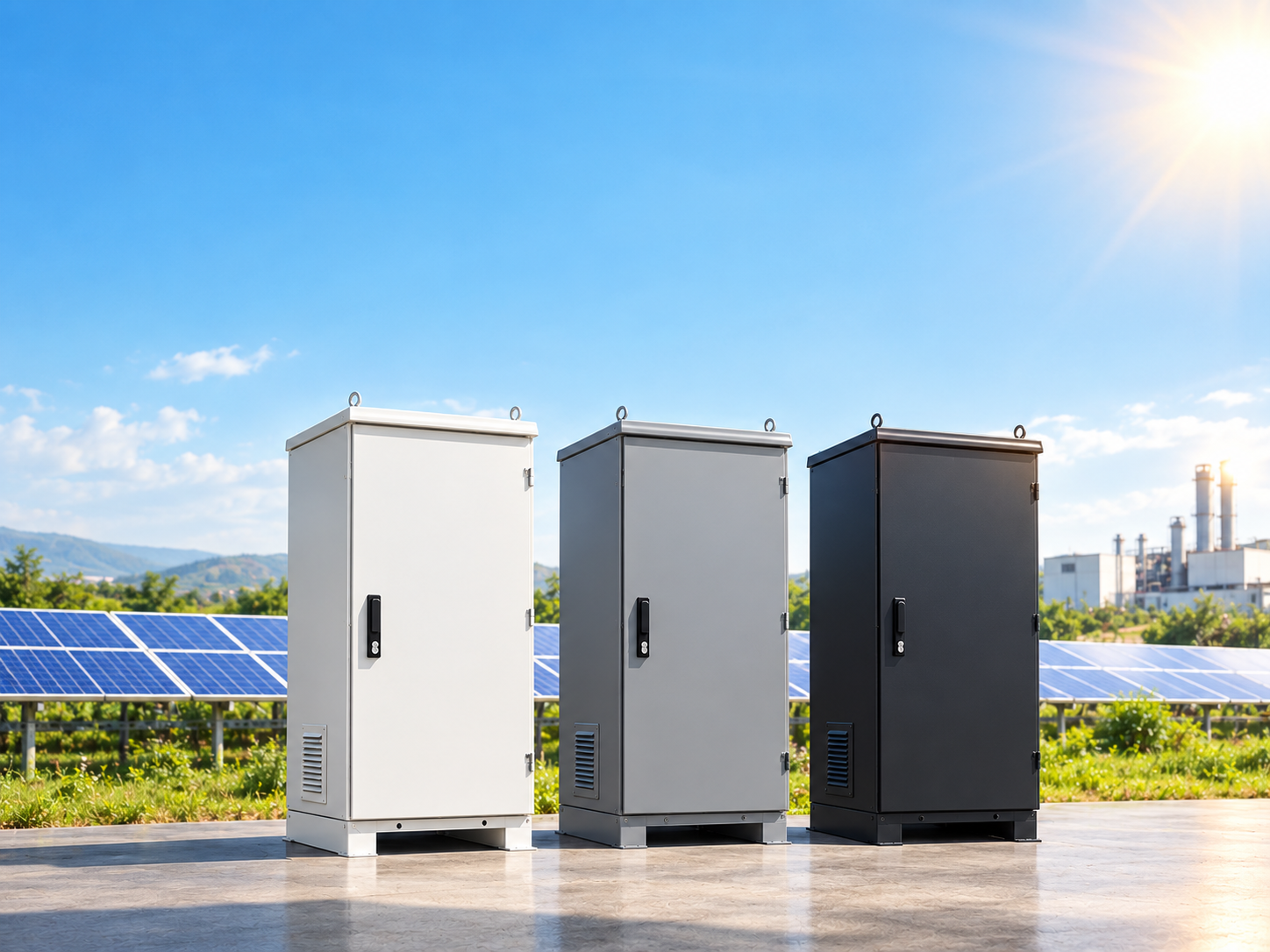
Solar farms and wind installations:
Are remote and exposed
Face transportation and installation stress
Even if panels are IP65:
Thin sheet metal can deform during transit
Doors lose sealing integrity
Lesson: Mechanical design defines long-term reliability, not just ingress protection.
Where the Gap Shows Up Most
You’ll see this issue prominently in:
Outdoor LV/MV switchboards
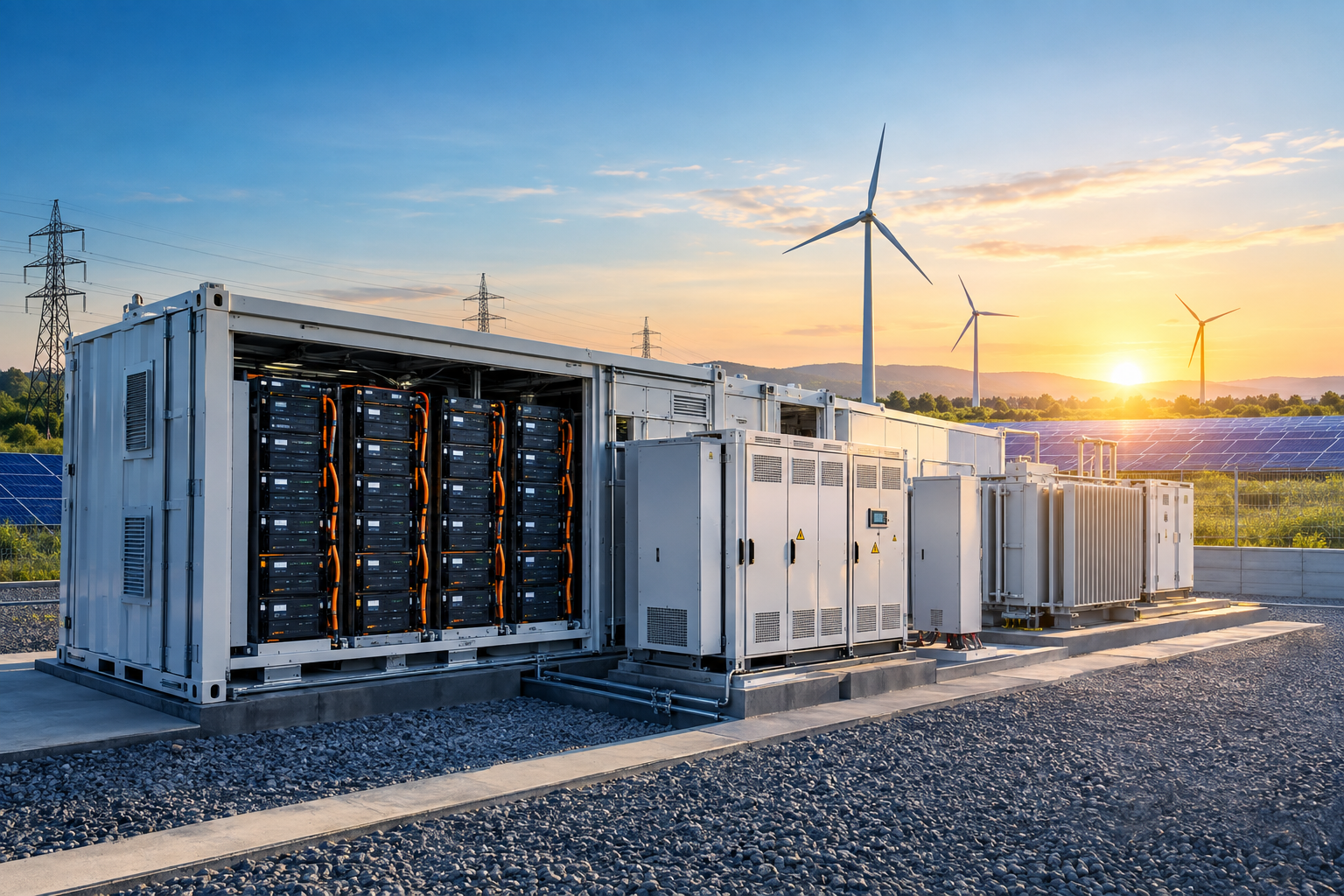
Battery Energy Storage Systems (BESS)
Telecom enclosures
EV charging infrastructure
Flameproof & hazardous area panels
These are exactly the segments where environmental + mechanical stresses coexist.
Engineering for Both: Best Practices
1. Specify Both IP and IK
Instead of:
IP65 panel
Use:
IP65, IK10 rated enclosure with reinforced structure
2. Structural Design Considerations
Mechanical strength depends on:
Sheet thickness (CRCA/SS)
Reinforcement ribs
Door stiffeners
Welding quality
Mounting base rigidity
3. Material Selection
Mild Steel: Needs reinforcement for IK compliance
Stainless Steel: Better mechanical durability
Polycarbonate: Good impact resistance but limited structural use
4. Testing Approach
Ensure:
Impact testing (IK compliance)
Vibration testing (especially for rail/marine)
Load-bearing verification
5. Lifecycle Thinking
Think beyond installation:
Will the panel survive 5–10 years of maintenance activity?
Will doors still align after repeated use?
Will gaskets remain effective after minor impacts?
The Cost of Ignoring IK Ratings
Neglecting mechanical protection leads to:
Premature enclosure failure
Increased maintenance cost
Safety risks
Downtime in critical systems
In high-value environments like data centers or utilities, a single panel failure can cascade into system-level downtime.
The Future: Moving Toward Holistic Protection
As infrastructure evolves:
Higher power densities
Compact designs
Increased human interaction
The focus is shifting from:
“Can it keep dust out?”
to:
“Can it survive the real world?”
This is especially true in:
Smart cities
EV infrastructure
Modular data centers
Integrated energy systems
Conclusion
IP rating answers one question:
“Can the enclosure resist environmental ingress?”
IK rating answers another:
“Can the enclosure survive physical reality?”
Ignoring IK ratings creates a silent vulnerability—the mechanical protection gap.
For truly reliable electrical infrastructure, both must work together.
FAQs
1. What is the difference between IP and IK rating?
IP rating measures protection against dust and water, while IK rating measures resistance to mechanical impact.
2. Is IK rating required for indoor panels?
Yes, especially in industrial or high-activity environments where accidental impacts or handling damage can occur.
3. What is the highest IK rating?
IK10 is the highest standard rating, representing resistance to 20 Joules of impact energy.
4. Can a panel be high IP but low IK?
Yes. A panel can be IP66 but still structurally weak and prone to deformation under impact.
5. How do I choose the right IK rating?
IK08: Light industrial use
IK10: Heavy industrial, outdoor, public, or hazardous environments