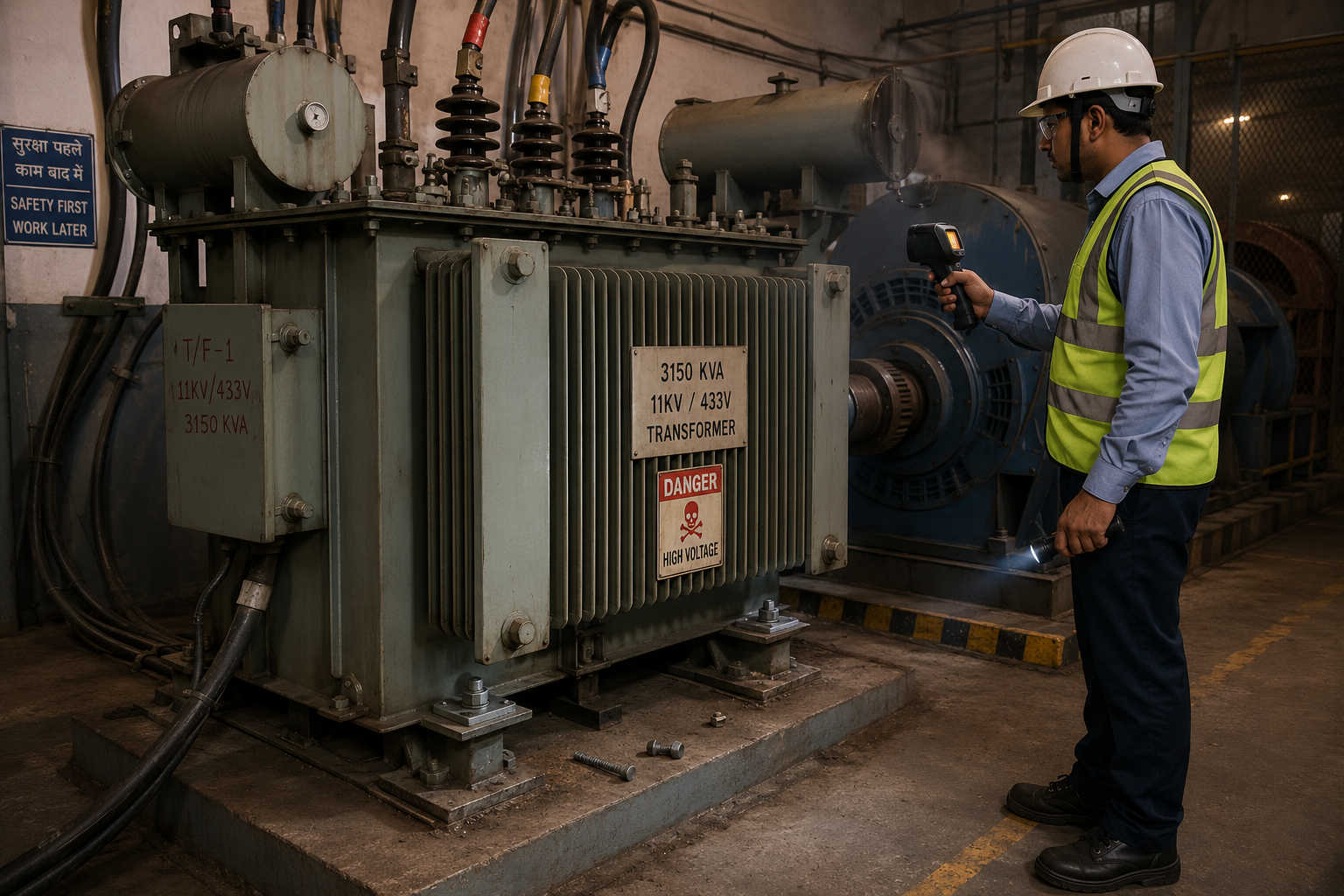
Electrical infrastructure is designed to withstand heat, current, environmental stress, and fault conditions. But one of the most underestimated threats inside industrial electrical systems is vibration.
Unlike sudden electrical faults that create immediate failures, vibration works slowly. It loosens connections, weakens mechanical integrity, damages insulation systems, and creates microscopic wear that compounds over time. In many industrial facilities, the earliest stages of electrical failure begin not with overloads or short circuits — but with continuous low-level vibration.
From transformer hum and rotating machinery to transportation fatigue during shipping, vibration affects almost every major electrical asset including switchboards, transformers, UPS systems, busbars, relay panels, battery racks, and cable terminations.
The dangerous part is that these failures usually remain invisible until the damage becomes severe enough to create overheating, arcing, insulation breakdown, nuisance tripping, or catastrophic shutdowns.
This article explains how vibration gradually kills electrical infrastructure, where the risks originate, and how industries can reduce long-term reliability failures.
Why Vibration Matters in Electrical Infrastructure
Electrical systems are often viewed as static installations. In reality, they constantly experience mechanical stress.
Sources of vibration include:
Transformer core magnetostriction
Nearby compressors and generators
HVAC systems
Large motors and pumps
Diesel generators
Heavy industrial machinery
Railway or metro infrastructure
Wind-induced structural movement
Transportation shock during logistics
Seismic activity
Harmonic-induced resonance
Over time, repeated vibration cycles create:
Loose bolted joints
Copper fatigue
Cracked insulation
Relay malfunction
Busbar displacement
Terminal loosening
Contact wear
Structural fatigue
Fastener backing-out
Micro-arcing
Even very small vibrations become dangerous when repeated continuously for years.
The Science Behind Electrical Vibration Damage
Mechanical vibration creates cyclic stress.
Every cycle introduces microscopic movement between connected components. Initially, the movement is too small to notice. But repeated thousands or millions of times, the effects accumulate.
This process causes:
1. Loss of Torque in Connections
Bolted electrical joints rely on stable clamping force.
Continuous vibration gradually reduces bolt tension due to:
Thread relaxation
Material creep
Surface wear
Differential expansion
Once torque drops, contact resistance increases.
Higher resistance leads to:
Localized heating
Oxidation
Thermal runaway
Arc formation
Many overheating failures inside switchboards originate from mechanically loosened joints rather than overloaded conductors.
2. Copper Fatigue and Cracking
Copper busbars and cable conductors experience repetitive flexing under vibration.
Over years, this can create:
Micro-cracks
Strand breakage
Joint weakening
Reduced conductivity
Flexible conductors usually survive longer than rigid unsupported connections.
This is especially common in:
Generator terminals
Transformer bushings
Bus duct joints
Battery interconnections
3. Insulation Degradation
Vibration slowly damages insulation systems through abrasion and friction.
Common issues include:
Cable insulation rubbing against sharp edges
Internal winding insulation wear
Support spacer loosening
Cracking in resin materials
Breakdown in epoxy supports
Once insulation weakens, partial discharge activity may begin.
Partial discharge eventually accelerates complete insulation failure.
4. Relay and Control System Malfunction
Sensitive protection devices can malfunction under excessive vibration.
Problems include:
False relay trips
Contact bounce
PLC connector loosening
Sensor calibration drift
Terminal block instability
Modern electrical systems rely heavily on electronic protection. Even slight vibration-related instability can create unpredictable operational behavior.
Transformer Hum: More Dangerous Than It Looks
Transformers naturally generate vibration due to magnetostriction.
Magnetostriction occurs when the transformer core expands and contracts slightly with alternating magnetic flux.
This creates the familiar transformer humming sound.
f(x)=A\sin(2\pi ft)
While transformer hum is normal, excessive vibration becomes dangerous when:
Core clamping weakens
Structural supports loosen
Harmonics increase
Mounting pads degrade
Resonance develops
Large power transformers in utility and industrial environments may operate continuously for decades. Even minor vibration can progressively damage:
Core laminations
Winding supports
Bushing connections
Cooling fan assemblies
Tap changer mechanisms
Real-World Example: Transformer Failures in Power Utilities
Several global utilities have reported vibration-induced winding displacement in aging transformers.
One widely discussed industry case involved transformers supplied to large utility networks where through-fault events combined with mechanical vibration gradually weakened winding support structures. Repeated mechanical stress eventually caused insulation failure and internal faults.
Major manufacturers like Siemens Energy, Hitachi Energy, and GE Vernova actively study vibration behavior in transformer diagnostics because winding displacement remains one of the leading causes of long-term transformer reliability issues.
Modern transformer condition monitoring increasingly includes:
Vibration signature analysis
Acoustic monitoring
Frequency response analysis
Online partial discharge testing
How Nearby Machinery Damages Electrical Panels
Electrical rooms are often located close to industrial equipment.
Common nearby sources include:
Air compressors
Chillers
Turbines
Press machines
Pumps
Conveyors
CNC machinery
Continuous floor vibration transfers directly into:
Switchboards
UPS systems
Relay panels
Battery banks
Bus duct systems
This becomes worse when:
Panels lack vibration isolation
Cable entries are rigid
Mounting frames are weak
Heavy busbars are unsupported
Facilities with high mechanical vibration often experience recurring nuisance issues that seem unrelated:
Random breaker trips
Hot spots
Communication faults
Loose terminals
Intermittent alarms
Many maintenance teams repeatedly replace components without addressing the root cause: vibration.
Transportation Fatigue: Damage Before Installation
One overlooked problem is transport-induced fatigue.
Electrical equipment may travel:
Thousands of kilometers by truck
Through rough roads
Across ports
Via rail networks
Through crane handling operations
During transportation, repeated shock and vibration can loosen:
Internal fasteners
Relay modules
Copper joints
Cable supports
Busbar mounts
This is especially critical for:
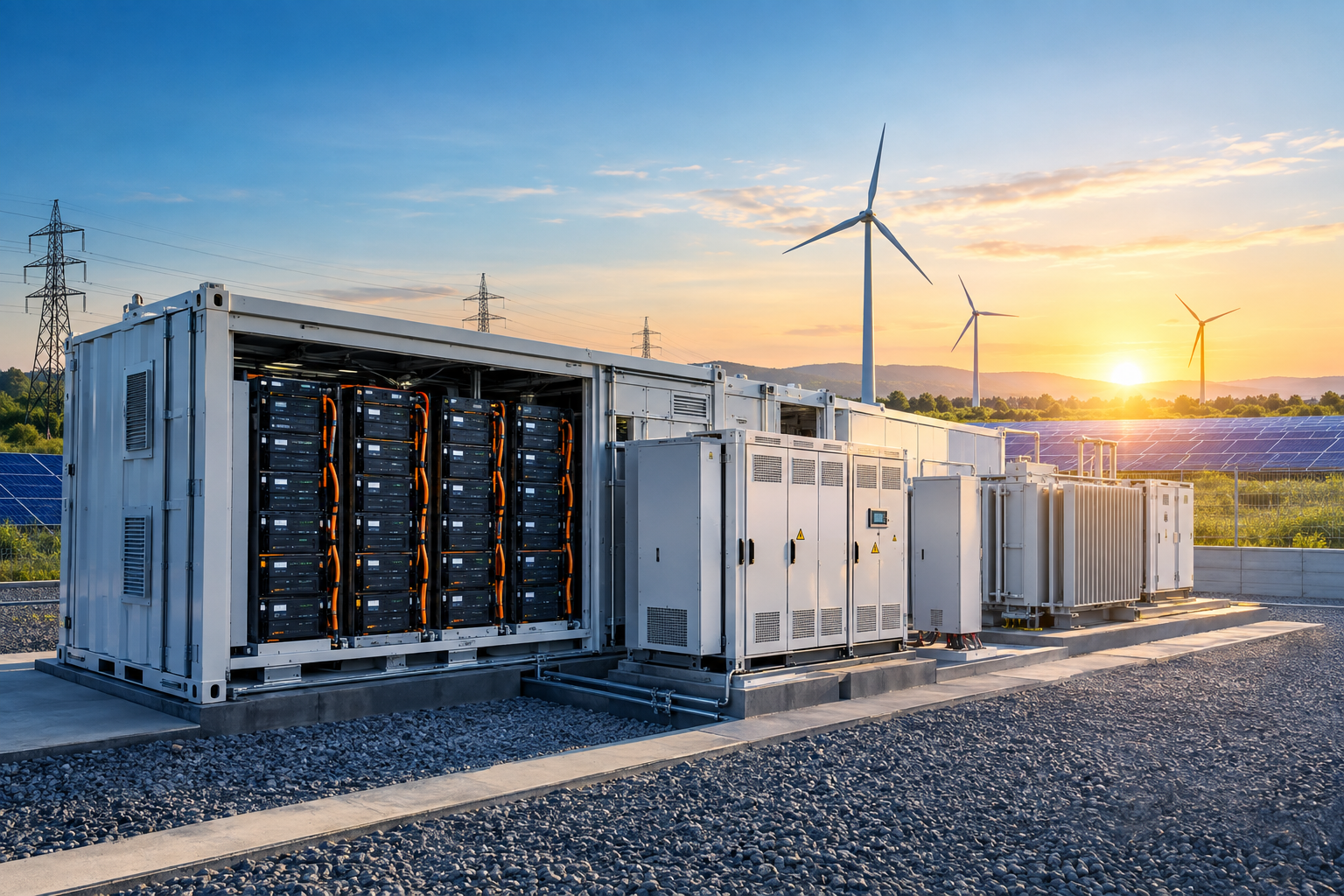
Containerized BESS systems
MV switchgear
UPS systems
Large battery racks
Transformer assemblies
Major companies like Schneider Electric and ABB use transport vibration testing standards to validate electrical equipment before shipment.
Improper packaging or insufficient transport bracing can create hidden internal damage before commissioning even begins.
Vibration Damage vs Thermal Damage
|
Parameter |
Vibration Damage |
Thermal Damage |
|
Failure Nature |
Slow mechanical degradation |
Heat-driven insulation aging |
|
Visibility |
Usually hidden initially |
Often visible through discoloration |
|
Detection Difficulty |
High |
Moderate |
|
Common Symptoms |
Loose joints, intermittent faults |
Overheating, burnt smell |
|
Root Cause |
Mechanical movement |
Excess current or poor cooling |
|
Time to Failure |
Months to years |
Can be rapid under overload |
|
Most Affected Components |
Bolted joints, relays, busbars |
Insulation, cables, breakers |
|
Typical Detection Method |
Vibration analysis, thermography |
Thermal scanning |
Industries Most Vulnerable to Vibration-Related Electrical Failures
Oil & Gas
Data Centers
Railways & Metro Systems
Renewable Energy Plants
Manufacturing Plants
Marine Applications
How Industries Detect Vibration Problems Early
Modern predictive maintenance increasingly includes vibration monitoring.
Key techniques include:
Infrared Thermography
Vibration Spectrum Analysis
Ultrasound Detection
Torque Audits
Partial Discharge Monitoring
Best Practices to Reduce Vibration Damage
Use Proper Anti-Vibration Mounting
Improve Cable Support
Use Locking Hardware
Perform Periodic Torque Checks
Avoid Structural Resonance
Use Flexible Connections
Conduct Transport Validation
The Growing Importance of Vibration Engineering in Modern Infrastructure
As electrical infrastructure becomes more compact and power-dense, vibration risks increase.
Modern systems now include:
Higher fault levels
Denser busbar arrangements
Larger battery systems
Faster switching electronics
More sensitive electronics
At the same time, industries demand:
24/7 uptime
Longer service life
Reduced maintenance
Higher reliability
This makes vibration engineering increasingly critical in:
Switchboard design
Battery energy storage systems
Data center infrastructure
Renewable power systems
Industrial automation
Many failures traditionally blamed on “electrical issues” are actually mechanical reliability problems in disguise.
Conclusion
Vibration rarely creates immediate electrical failures.
Instead, it slowly weakens infrastructure from within.
A slightly loose terminal today may become a thermal hotspot next year. A tiny insulation abrasion may eventually become a major fault. A transport-induced micro-shift may later evolve into catastrophic equipment failure under full load.
That is why vibration should never be treated as a minor mechanical issue.
Reliable electrical infrastructure depends not only on electrical design — but also on mechanical stability over decades of operation.
The industries that recognize this early invest in:
Better mounting systems
Better transport protection
Better predictive maintenance
Better vibration diagnostics
Better long-term reliability engineering
Because in electrical systems, the failures you cannot see are often the most dangerous.
FAQs
1. Can vibration really cause electrical fires?
Yes. Continuous vibration can loosen electrical connections, increasing resistance and generating heat. Over time, this can create arcing or overheating severe enough to start electrical fires.
2. Which electrical components are most affected by vibration?
Commonly affected components include:
Busbars
Cable lugs
Relay terminals
Transformer windings
Battery interconnections
Control wiring
Breaker connections
3. How do industries detect vibration-related electrical failures?
Industries use:
Thermal imaging
Vibration analysis
Ultrasound testing
Torque inspections
Partial discharge monitoring
These methods help identify problems before catastrophic failure occurs.
4. Is transformer humming always dangerous?
No. Some transformer hum is normal due to magnetostriction. However, unusually high or changing vibration levels may indicate loosened core structures, resonance, or winding instability.
5. Can transportation damage electrical systems before installation?
Yes. Long-distance transportation can create hidden internal loosening and fatigue in switchboards, transformers, UPS systems, and BESS containers if proper vibration protection is not used.