Introduction
Battery Energy Storage Systems (BESS) are rapidly becoming the backbone of modern power infrastructure. As renewable energy adoption accelerates worldwide, utility-scale, commercial, and industrial energy storage projects are being deployed at unprecedented rates.
Most industry discussions around BESS focus on battery chemistry, energy density, thermal management, and battery management systems (BMS). However, one critical design element often receives far less attention than it deserves: internal segregation within BESS containers.
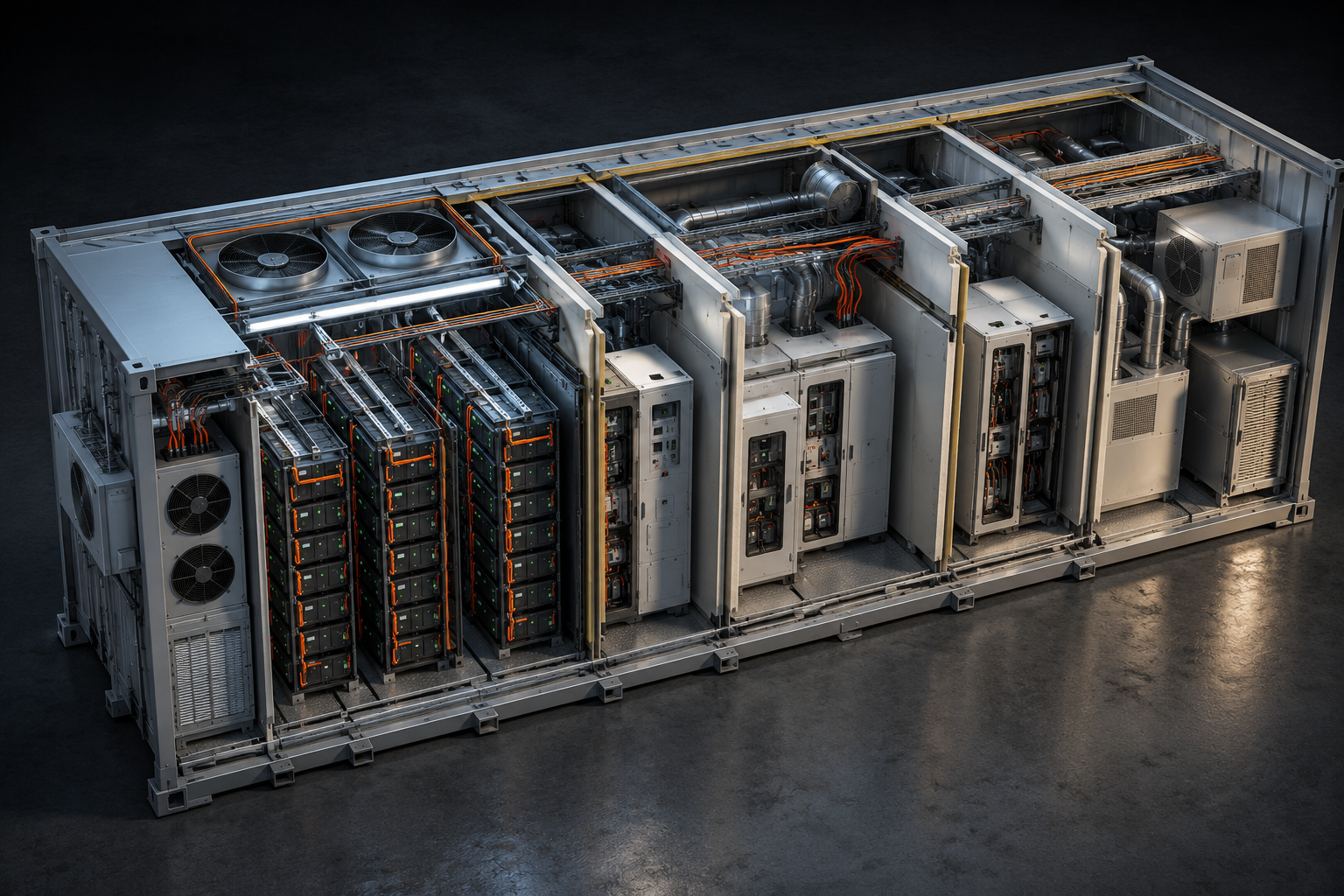
As energy storage capacities increase, a single container may house megawatt-hours of energy alongside power conversion systems, switchgear, communication equipment, HVAC systems, fire suppression equipment, and control electronics. Without proper compartmentalization, a localized fault can quickly escalate into a system-wide failure.
Better internal segregation is no longer a design preference—it is becoming a fundamental requirement for fire containment, maintenance safety, operational reliability, and regulatory compliance.
What Is Internal Segregation in a BESS Container?
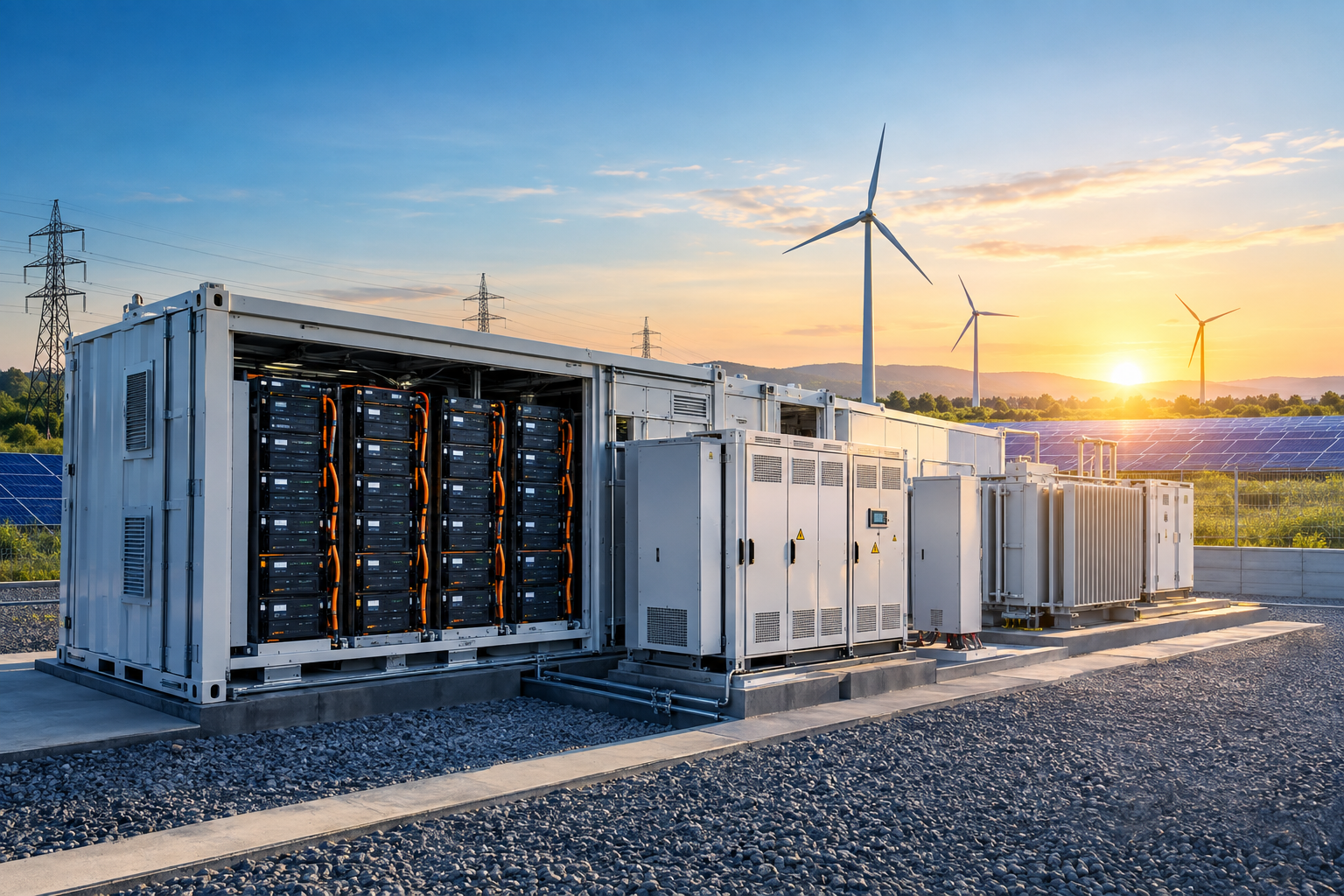
Internal segregation refers to the physical separation of different functional zones within a BESS container using barriers, partitions, fire-rated enclosures, dedicated compartments, and isolated cable pathways.
Typical segregated zones include:
Battery racks/modules
DC combiner sections
Battery Management Systems (BMS)
Power Conversion Systems (PCS)
LV/MV switchgear
Communication and control systems
HVAC equipment
Fire suppression systems
Auxiliary power distribution
Rather than creating one large open internal space, segregation divides the container into controlled zones that limit the spread of fire, smoke, heat, and electrical faults.
Why Traditional Open-Layout Containers Create Risks
Many early-generation BESS deployments utilized relatively open container layouts to maximize usable space and simplify installation.
While this approach reduces manufacturing complexity, it introduces significant operational risks.
A failure occurring in one battery rack can expose adjacent racks to:
Extreme heat
Smoke contamination
Arc flash events
Toxic gas accumulation
Cascading thermal runaway
When critical systems share the same air volume and physical space, fault propagation becomes significantly more likely.
The result can be:
Longer outages
Higher repair costs
Greater safety risks
More extensive equipment replacement
Fire Containment: The Biggest Reason for Better Segregation
Thermal runaway remains one of the most significant challenges in lithium-ion energy storage systems.
Once initiated, thermal runaway can generate:
Temperatures exceeding 600°C
Flammable gases
Rapid pressure buildup
Fire propagation between modules
Proper segregation acts as a critical barrier that slows or prevents fire spread.
How Segregation Improves Fire Safety
Isolates affected battery zones
Limits heat transfer between racks
Contains smoke and toxic gases
Protects critical control equipment
Gives suppression systems more time to respond
Instead of losing an entire container, operators may only need to isolate and replace a specific compartment.
This dramatically reduces financial losses and downtime.
Real-World Example: Moss Landing Energy Storage Facility
One of the industry's most discussed incidents occurred at the
Moss Landing Energy Storage Facility in California.
A thermal event in one section of the facility highlighted how closely packed battery systems can create challenges for fault containment and emergency response.
Following such incidents, developers and regulators increasingly emphasized:
Improved compartmentalization
Enhanced fire barriers
Better fault isolation strategies
Stronger monitoring systems
The event became a catalyst for reevaluating BESS safety architecture across the industry.
Fault Isolation: Preventing One Failure from Becoming Many
A battery energy storage system contains thousands of interconnected components.
Potential faults include:
Cell failures
Loose connections
Arc faults
Insulation breakdown
Cooling system failures
BMS communication errors
Without segregation, a fault in one subsystem can affect neighboring systems.
Example Scenario
Imagine a DC bus fault occurring within one battery rack.
In a non-segregated container:
Heat spreads rapidly
Nearby cables become damaged
Control equipment may fail
Additional battery strings may disconnect
In a segregated design:
The fault remains localized
Protection systems isolate the affected section
Remaining battery blocks continue operating
Asset damage remains limited
The difference between replacing a rack and replacing an entire container can amount to hundreds of thousands of dollars.
Maintenance Safety: Protecting Service Personnel
Maintenance teams routinely perform:
Battery inspections
Thermal imaging
BMS diagnostics
Cable terminations
Breaker maintenance
HVAC servicing
In open-layout containers, technicians often work close to energized equipment and battery systems.
Proper segregation enables:
Safer Access Zones
Dedicated service compartments allow maintenance without entering battery areas.
Reduced Arc Flash Exposure
Physical barriers help reduce personnel exposure to energized conductors.
Improved Lockout-Tagout Procedures
Technicians can isolate individual compartments rather than shutting down the entire system.
Faster Troubleshooting
Clearly separated systems simplify diagnostics and reduce maintenance time.
For large utility projects, these benefits translate directly into lower operational expenditure.
Comparison: Segregated vs Non-Segregated BESS Containers
| Parameter | Non-Segregated Container | Segregated Container |
| Fire Containment | Limited | High |
| Thermal Runaway Propagation Risk | High | Lower |
| Fault Isolation | Difficult | Effective |
| Maintenance Safety | Moderate | Improved |
| Repair Cost After Incident | High | Lower |
| Operational Downtime | Longer | Shorter |
| Emergency Response Efficiency | Challenging | Better |
| Regulatory Compliance Readiness | Moderate | Strong |
| Asset Protection | Limited | Enhanced |
| Long-Term Reliability | Lower | Higher |
Industry Leaders Are Moving Toward Compartmentalized Design
Major BESS manufacturers increasingly incorporate compartmentalization into their designs.
Tesla Megapack
Tesla's Megapack uses integrated safety architecture, advanced thermal monitoring, and compartment-focused protection strategies designed to limit fault propagation.
Fluence
Fluence has emphasized modular battery architecture and safety-driven system layouts that support improved fault isolation and maintainability.
Sungrow
Sungrow incorporates multi-layer safety protection systems, thermal monitoring, and compartmentalized design approaches within many of its utility-scale storage offerings.
Wärtsilä
Wärtsilä continues investing in advanced safety engineering, including fire protection and containment methodologies within large-scale energy storage installations.
The industry trend is clear: larger energy capacities demand stronger internal segregation strategies.
Regulatory Standards Are Raising Expectations
As global BESS deployments increase, standards and testing requirements are becoming more stringent.
Key frameworks influencing container design include:
NFPA 855
UL 9540
UL 9540A
IEC 62933
Local fire authority requirements
Utility-specific safety specifications
Many project owners now evaluate not only battery performance but also:
Fire propagation resistance
Emergency accessibility
Serviceability
Equipment separation
Hazard mitigation measures
Internal segregation directly supports compliance with these evolving expectations.
Designing the Next Generation of Safer BESS Containers
Future-ready BESS containers should include:
Fire-Rated Internal Barriers
Prevent flame spread between compartments.
Dedicated Electrical Compartments
Separate batteries from switchgear and control equipment.
Isolated Cable Routing
Reduce fault propagation through cable pathways.
Independent Ventilation Zones
Prevent smoke migration across the container.
Service Access Corridors
Enable maintenance without exposing personnel to battery sections.
Smart Monitoring Per Compartment
Allow localized detection and rapid fault response.
These features create a safer, more reliable energy storage asset over its operational life.
Conclusion
As BESS projects continue scaling from megawatt-hours to gigawatt-hours, safety architecture becomes just as important as battery technology itself.
Internal segregation serves three critical purposes:
Containing fires before they escalate
Isolating faults before they spread
Protecting personnel during maintenance
The industry has learned from real-world incidents that a single fault should never jeopardize an entire energy storage asset.
Developers, EPCs, utilities, and asset owners who prioritize compartmentalized BESS container design gain more than compliance—they gain higher reliability, lower lifecycle costs, improved safety, and stronger operational resilience.
In the next generation of energy storage infrastructure, internal segregation will not be viewed as an optional enhancement. It will be recognized as a fundamental design requirement.
Frequently Asked Questions (FAQs)
1. What is internal segregation in a BESS container?
Internal segregation is the physical separation of battery systems, electrical equipment, control systems, and auxiliary components into dedicated compartments to improve safety and reliability.
2. How does segregation reduce fire risk?
Segregation limits the spread of heat, smoke, and flames, helping contain thermal runaway events within a specific area rather than affecting the entire container.
3. Does segregation increase BESS project costs?
Initial costs may increase slightly, but reduced downtime, lower repair costs, and improved asset protection often deliver significant lifecycle savings.
4. Are modern BESS standards encouraging compartmentalization?
Yes. Standards such as NFPA 855, UL 9540, and UL 9540A increasingly emphasize fire safety, fault containment, and system-level risk mitigation.
5. Which industries benefit most from segregated BESS containers?
Utilities, data centers, renewable energy plants, manufacturing facilities, commercial campuses, and critical infrastructure operators benefit significantly from enhanced BESS safety and reliability.