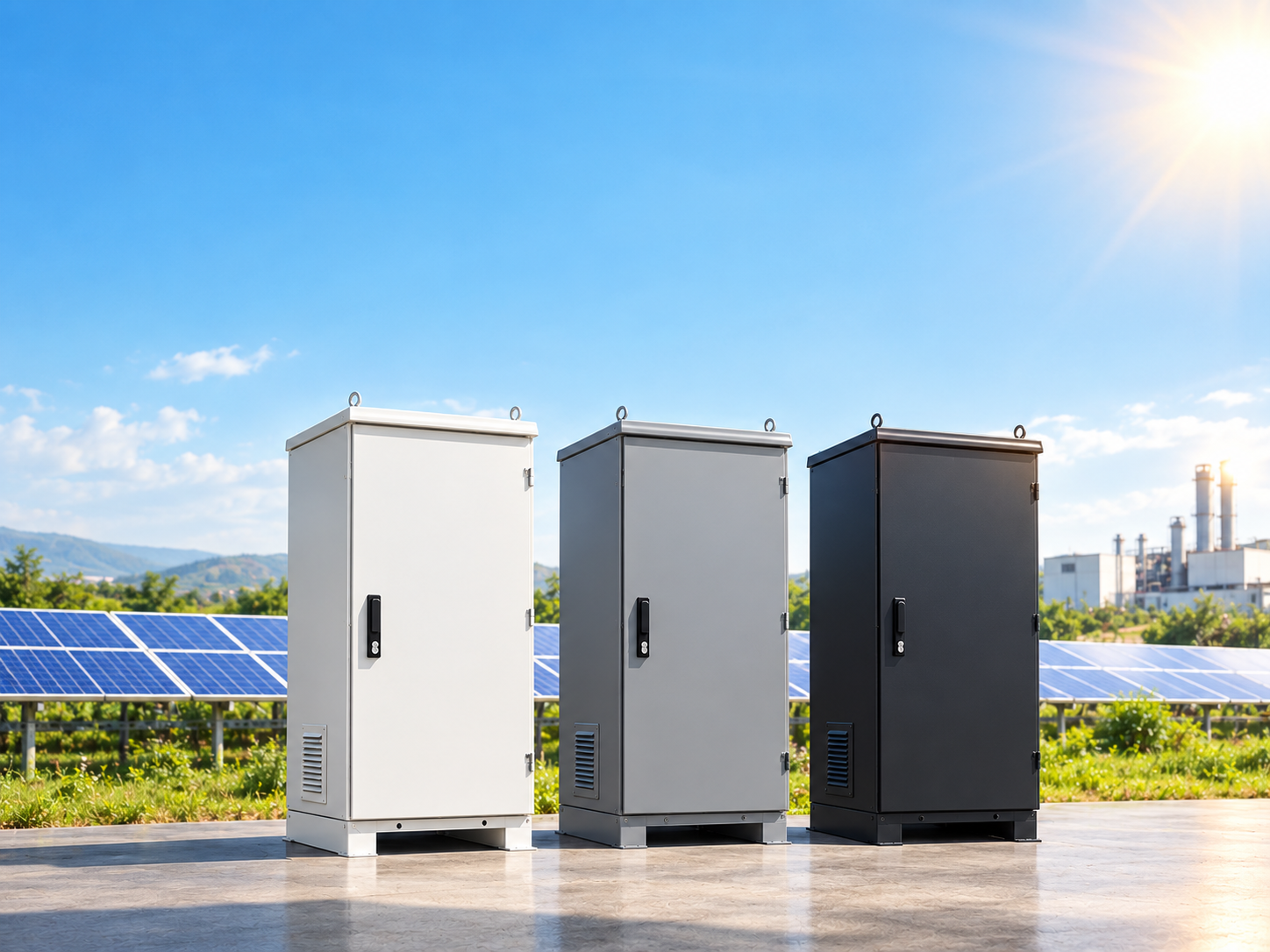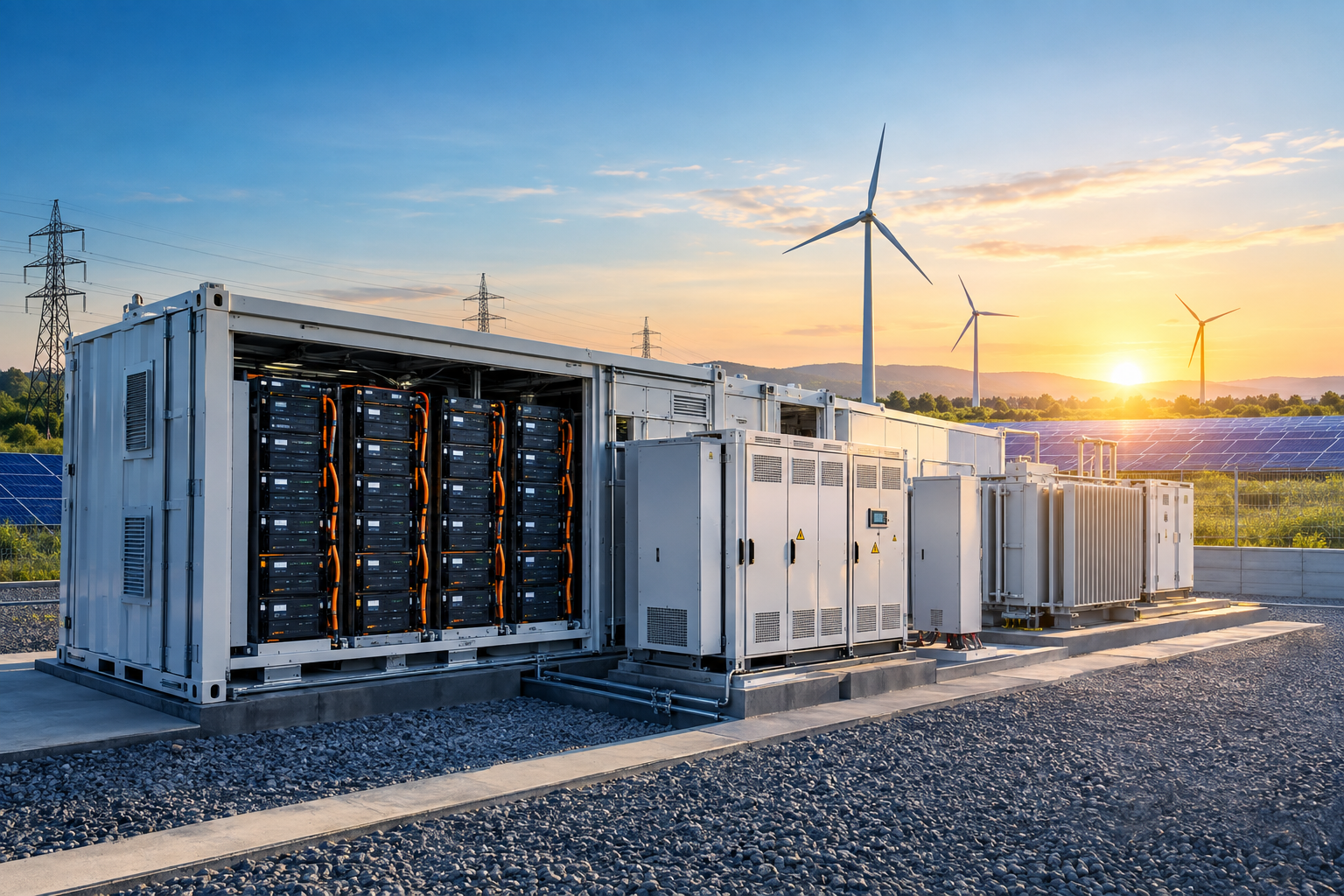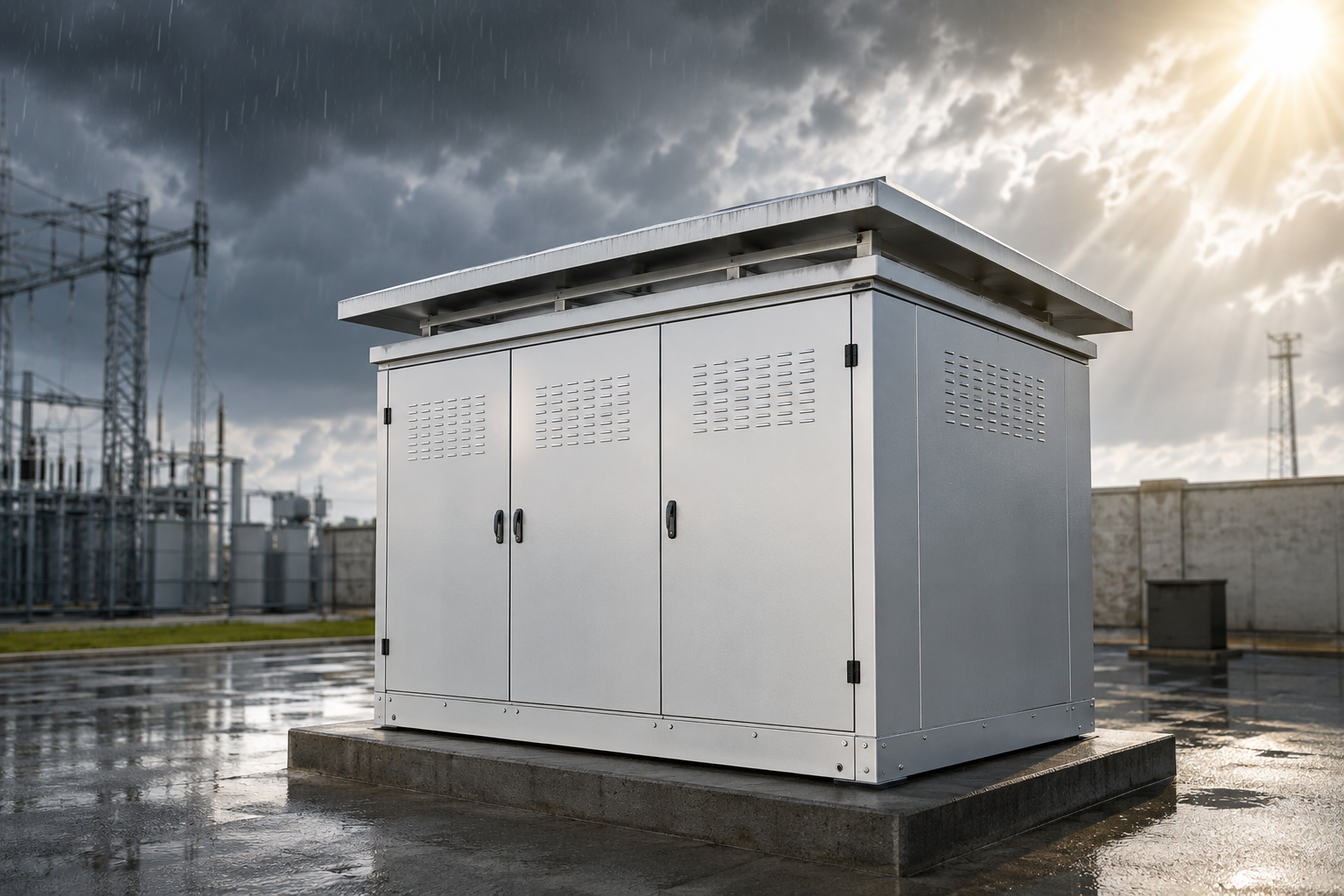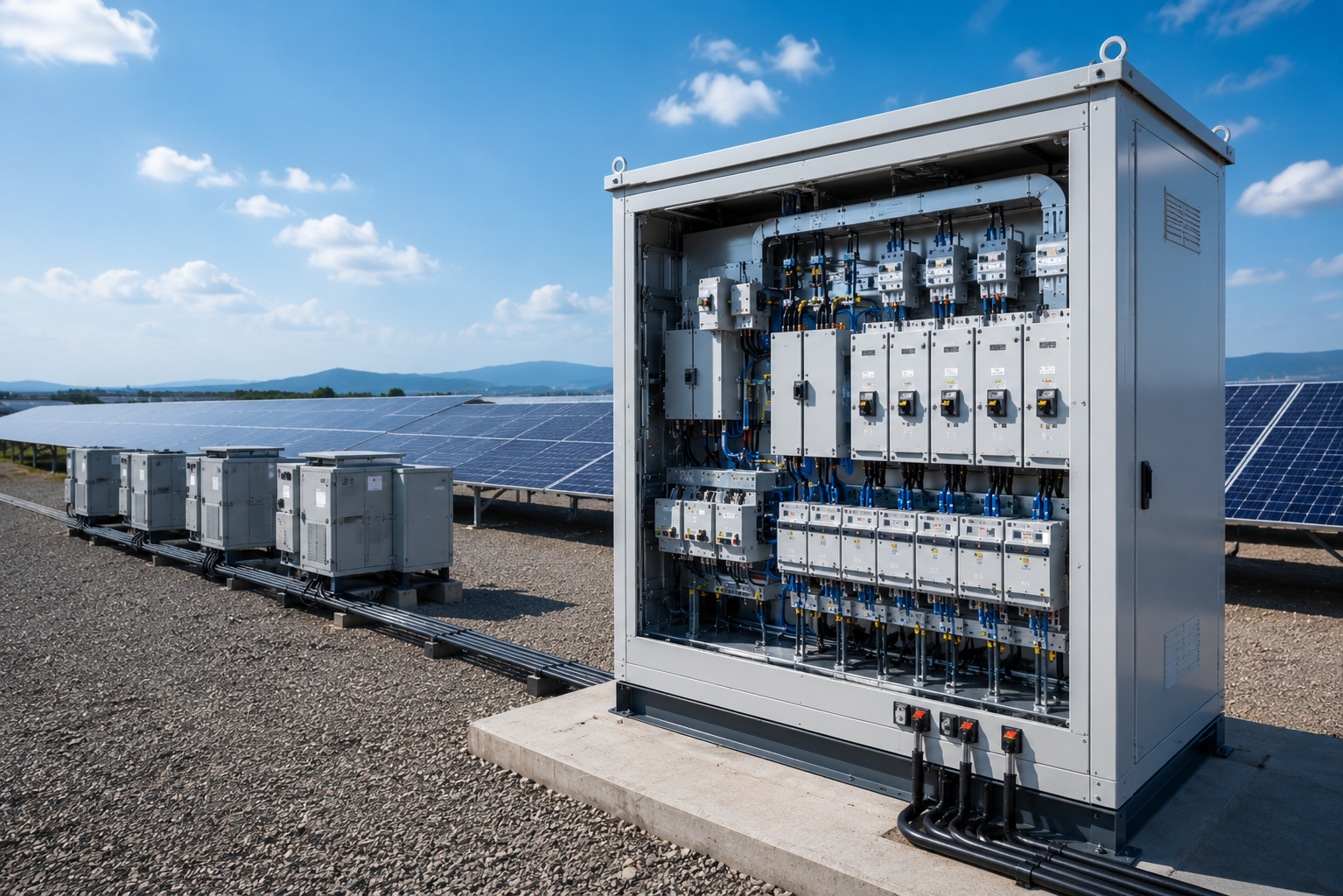
As solar power installations continue to grow across residential, commercial, industrial, and utility-scale projects, discussions often focus on solar panels, inverters, battery energy storage systems (BESS), and energy generation efficiency. However, one critical component that rarely receives the attention it deserves is the Solar ACDB (AC Distribution Box).
While solar modules generate electricity and inverters convert DC power into usable AC power, the ACDB acts as a crucial protection and distribution layer that safeguards equipment, improves system reliability, and helps maintain uninterrupted operations.
In many cases, a properly designed ACDB can mean the difference between a minor electrical fault and a costly plant-wide shutdown.
This article explores why Solar ACDBs are among the most underrated components in solar power systems and how they contribute to safety, uptime, equipment protection, and long-term operational success.
What is a Solar ACDB?
A Solar ACDB (AC Distribution Box) is an electrical distribution panel installed on the AC side of a solar power system, typically between the inverter and the facility load or utility grid connection.
Its primary functions include:
Power distribution
Circuit protection
Fault isolation
Surge protection
Breaker coordination
Safe maintenance access
The ACDB acts as a centralized control and protection point that manages the power generated by solar inverters before it reaches the grid or connected loads.
Whether it is a rooftop solar installation, commercial solar plant, industrial solar project, or utility-scale solar farm, the ACDB plays a vital role in maintaining electrical system integrity.
Why ACDBs Are Critical in Solar Power Plants
Many solar project owners focus on maximizing energy generation. However, generation means little if the system cannot operate reliably.
Solar plants face numerous electrical risks, including:
Lightning-induced surges
Grid disturbances
Short circuits
Ground faults
Equipment failures
Overcurrent conditions
Switching transients
Without adequate protection mechanisms, these events can damage expensive assets such as:
Solar inverters
Transformers
Switchboards
Monitoring systems
Protection relays
Energy storage systems
The ACDB serves as the first line of defense against these risks.
The Hidden Cost of Poor Protection
When evaluating solar projects, stakeholders often compare panel efficiency, inverter efficiency, and installation costs.
What is frequently overlooked is the cost of downtime.
A single fault can lead to:
Production losses
Revenue loss
Repair expenses
Insurance claims
Reduced equipment life
Operational disruptions
For commercial and industrial facilities, even a few hours of downtime can translate into significant financial impact.
This is where a properly engineered Solar ACDB becomes invaluable.
Key Functions of a Solar ACDB
1. Fault Isolation
One of the most important functions of an ACDB is fault isolation.
Electrical faults are inevitable in any power system.
When a fault occurs, the objective is not simply to trip the power supply.
The objective is to isolate only the affected section while allowing the remainder of the system to continue operating.
Without proper fault isolation:
Entire solar plants may shut down
Critical loads may lose power
Recovery time increases
With proper fault isolation:
Damage remains localized
System uptime improves
Maintenance becomes easier
2. Surge Protection
Solar installations are particularly vulnerable to surge events.
These surges may originate from:
Lightning strikes
Nearby lightning activity
Utility grid switching
Transformer operations
Large motor loads
Surges can instantly damage:
Inverter electronics
Communication systems
Monitoring equipment
Protection devices
Modern ACDBs incorporate Surge Protection Devices (SPDs) that divert excess voltage safely to ground before it reaches sensitive equipment.
Considering that inverters often represent one of the most expensive components in a solar plant, surge protection alone can justify the investment in a quality ACDB.
3. Protection Coordination
Protection coordination is one of the most overlooked concepts in solar power system design.
It ensures that only the protection device closest to a fault operates first.
For example:
If a fault occurs on one feeder:
The feeder breaker should trip first
The upstream breaker should remain operational
Without proper coordination:
Multiple breakers may trip simultaneously
Entire systems may go offline
Troubleshooting becomes more difficult
Well-designed ACDBs support selective protection strategies that improve overall system reliability.
4. Equipment Protection
Solar plants contain high-value electrical assets.
A typical commercial solar installation may include:
Multiple string inverters
LV switchboards
Transformers
Monitoring systems
Communication networks
These assets require coordinated protection against:
Overcurrent
Short circuits
Earth faults
Voltage disturbances
The ACDB provides the protection infrastructure necessary to safeguard these investments.
Real-World Importance: Lessons from Large Solar Projects
Utility-Scale Solar Farms
Large utility-scale solar developers operate projects that span hundreds of megawatts.
Companies such as:
Adani Green Energy
NTPC Green Energy
ReNew Energy Global
manage solar assets where reliability directly affects revenue generation.
In projects of this scale, even small electrical faults can impact significant amounts of generation capacity.
As a result, extensive protection schemes, coordinated switchgear systems, and carefully engineered AC distribution infrastructure are standard practice.
Solar Parks in Lightning-Prone Regions
India experiences high lightning activity in several regions, including parts of Rajasthan, Maharashtra, Karnataka, and Odisha.
Large solar parks often incorporate multiple layers of surge protection to protect:
Inverters
SCADA systems
Communication equipment
Grid interconnection infrastructure
Without adequate AC-side surge protection, even indirect lightning events can cause expensive equipment failures.
Data Centers Using Solar Power
Major data center operators increasingly integrate renewable energy into their operations.
Companies such as:
Microsoft
Amazon
invest heavily in power reliability and redundancy because downtime can cost millions of dollars.
While their power infrastructure extends far beyond solar installations, the underlying principle remains the same:
Protection architecture determines system reliability.
Every layer of power distribution must be designed to isolate faults and protect critical assets.
Common Mistakes in Solar ACDB Design
Undersized Breakers
Selecting breakers based solely on normal operating current can lead to nuisance tripping and reduced reliability.
Inadequate Surge Protection
Using low-quality or improperly rated surge protection devices can leave expensive equipment vulnerable.
Poor Protection Coordination
Breakers with overlapping trip characteristics can cause unnecessary shutdowns during fault conditions.
Lack of Future Expansion Planning
Many solar installations expand over time.
An ACDB should accommodate future growth without requiring complete replacement.
Non-Compliant Design Practices
Compliance with relevant standards is critical for safety and performance.
Typical considerations include:
IEC standards
Utility interconnection requirements
Local electrical regulations
Short-circuit withstand ratings
ACDBs and Solar Plant Reliability
Reliability is becoming one of the most important performance metrics in modern solar projects.
Investors increasingly evaluate projects based on:
Availability
Uptime
Maintenance costs
Lifecycle performance
A solar plant generating high energy output but suffering frequent outages will ultimately underperform compared to a slightly less productive but highly reliable installation.
This is why protection systems are becoming a greater focus during project design.
The ACDB sits at the center of that strategy.
The Future of Solar Protection Systems
As solar installations become larger and more complex, ACDBs are evolving beyond simple distribution panels.
Future-ready ACDBs increasingly incorporate:
Advanced monitoring
Smart metering
Remote diagnostics
Enhanced surge protection
Integrated communication capabilities
Predictive maintenance features
These capabilities help operators detect issues earlier and reduce unplanned downtime.
As utility-scale solar, battery energy storage systems (BESS), and hybrid renewable projects continue to expand, protection architecture will become even more important.
Conclusion
Solar panels may generate the power.
Inverters may convert it.
But the Solar ACDB is what protects the entire system from electrical events that can compromise performance, damage equipment, and cause costly downtime.
Its role extends far beyond power distribution.
A well-engineered Solar ACDB provides:
Fault isolation
Surge protection
Protection coordination
Equipment protection
Improved reliability
Enhanced safety
In today's solar industry, where uptime, asset protection, and operational continuity directly impact profitability, the ACDB is no longer just a supporting component.
It is one of the most important layers of protection in the entire solar power system.
Frequently Asked Questions (FAQs)
1. What is the purpose of a Solar ACDB?
A Solar ACDB distributes AC power from solar inverters and provides protection against faults, overloads, short circuits, and surge events.
2. Why is surge protection important in a Solar ACDB?
Surge protection prevents voltage spikes caused by lightning or grid disturbances from damaging inverters, monitoring systems, and other electrical equipment.
3. What is protection coordination in a solar power system?
Protection coordination ensures that only the protection device nearest to a fault operates, minimizing downtime and preventing unnecessary system shutdowns.
4. Can a Solar ACDB improve solar plant reliability?
Yes. Proper fault isolation, coordinated protection, and surge protection significantly improve uptime, equipment life, and operational reliability.
5. What should be considered when selecting a Solar ACDB?
Key considerations include breaker ratings, short-circuit withstand capacity, surge protection, protection coordination, future expansion capability, and compliance with applicable standards.