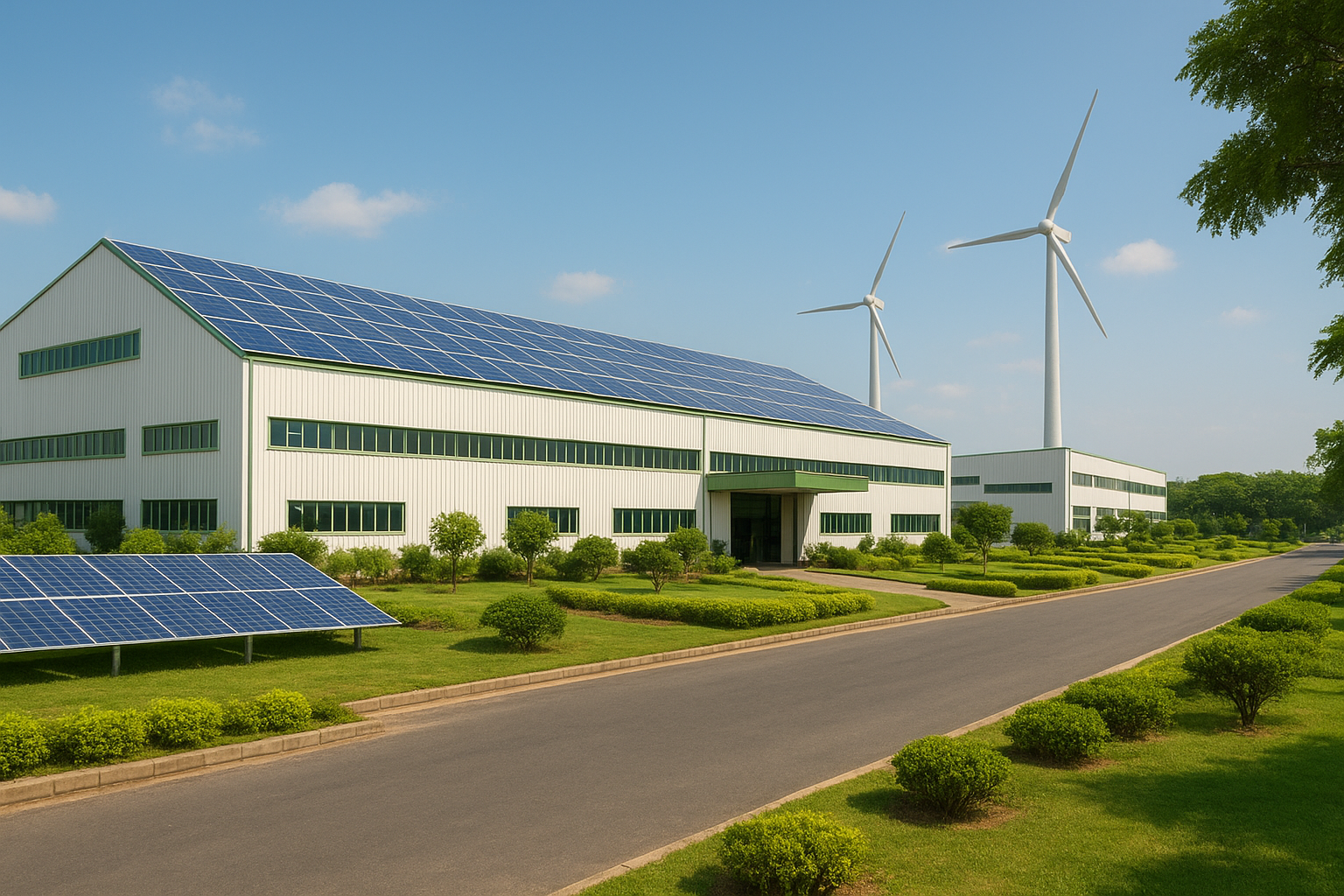
As India progresses toward becoming a trillion-dollar manufacturing economy, sustainable manufacturing is emerging as the backbone of future-ready industries. With global customers demanding eco-conscious products and governments implementing tighter ESG regulations, Indian manufacturers are increasingly adopting green industrial solutions, eco-friendly engineering design, and renewable manufacturing processes.
This shift is driven not only by environmental responsibility but also by major economic advantages, such as reduced operating costs, increased process efficiency, and improved brand reputation. Leading corporations such as Tata Steel, Reliance Industries, Mahindra, Godrej, Bosch India, Maruti Suzuki, and Hindustan Unilever have already taken bold steps toward sustainability—setting benchmarks for the rest of the sector.
Introduction
India’s traditional manufacturing landscape has been defined by heavy energy usage, resource-intensive processes, and significant waste generation. However, with the rise of digital manufacturing and renewable energy, the country is shifting toward sustainable manufacturing in India, pushing industries to innovate while minimizing environmental impact.
Government policies like:
…have accelerated this change, encouraging industries to adopt green manufacturing practices at scale.
Today, companies across engineering, automotive, electronics, FMCG, heavy machinery, and infrastructure sectors are integrating sustainability as a strategic priority—not a compliance requirement.
Green Manufacturing Practices in India
1. Renewable Manufacturing Processes
Industries are increasingly shifting toward solar, wind, and biomass to power manufacturing lines.
Real-life examples:
These renewable manufacturing processes significantly reduce carbon emissions and dependence on fossil fuels.
2. Energy-Efficient Machinery & Smart Manufacturing
Automation and digitalization are key to sustainable operations.
Real-life examples:
3. Eco-Friendly Engineering Design
Companies are now designing products with recyclability, durability, and efficiency in mind.
Examples:
Eco-friendly design reduces environmental impact and extends product lifespan.
4. Water Conservation & Zero Liquid Discharge (ZLD)
Water efficiency is a major priority in Indian industry.
Examples:
5. Waste Management & Circular Economy
Companies are converting waste into resources—closing the loop.
Examples:
Circular economy practices are now core to sustainable manufacturing in India.
Traditional Manufacturing vs Sustainable Manufacturing
|
Parameter |
Traditional Manufacturing |
Sustainable Manufacturing |
|
Energy Usage |
High fossil fuel dependence |
Solar, wind, waste-heat recovery (Tata Motors, JSW Steel) |
|
Material Selection |
Heavy metals, non-recyclables |
Recyclable & lightweight materials (Godrej, Ashok Leyland) |
|
Process Approach |
Linear production cycle |
Circular economy practices (Mahindra, Tata Steel) |
|
Carbon Emissions |
High emissions |
Low-carbon operations with ESG focus |
|
Technology Adoption |
Minimal automation |
IoT, AI, robotics, predictive maintenance (Bosch, Maruti Suzuki) |
|
Water Usage |
High consumption |
ZLD, recycling (ITC, Reliance Industries) |
|
Waste Management |
Large waste output |
90–100% recycling and reuse (HUL, Tata Steel) |
|
Operational Cost |
Long-term increase |
Reduced long-term cost through efficiency |
|
Compliance |
Basic statutory compliance |
International ESG & sustainability standards |
Benefits of Sustainable Manufacturing
1. Lower Operating Costs
Energy-efficient machines, automation, and renewable energy reduce electricity bills and maintenance costs.
Example:
JSW Steel cut energy consumption significantly through heat recovery systems.
2. ESG Compliance & Global Market Access
International buyers now prefer suppliers with strong sustainability credentials.
Example:
Global brands partnering with Indian suppliers require certifications like ISO 14001, ZED, and ESG reporting.
3. Improved Efficiency & Productivity
Automation and digital manufacturing help reduce:
Example:
Bosch India’s smart factory in Bidadi increased efficiency using IoT-based analytics.
4. Better Brand Value
Customers and investors trust brands that follow eco-friendly practices.
Example:
Mahindra’s “Planet Positive” initiative significantly increased global investor sentiment.
5. Reduced Environmental Impact
Sustainable practices directly reduce:
Brick & Byte’s Commitment to Sustainable Manufacturing
At Brick Byte, we believe that sustainability is not a trend—it is the foundation of future manufacturing.
1. Green Engineering & Eco-Friendly Product Design
Our products are engineered with:
2. Energy-Efficient Production Infrastructure
We follow:
3. Waste Reduction & Material Optimization
Brick & Byte uses:
4. Resource-Efficient Systems
Rainwater harvesting, planned air circulation, and efficient layout management ensure minimal energy and water wastage.
5. Future-Ready Green Roadmap
Plans include:
Brick & Byte aims to become one of India’s most future-ready eco-friendly engineering and manufacturing companies.
Conclusion
Sustainable manufacturing is the most significant industrial transformation India has seen in decades. From renewable energy and zero-waste systems to digital automation and circular economy models, leading giants like Tata, Mahindra, Reliance, JSW, Bosch, Godrej, and HUL have shown that sustainability leads to business growth—not compromise.
For companies like Brick & Byte, this shift is an opportunity to innovate, reduce environmental impact, and build engineering solutions that help industries become cleaner, smarter, and more efficient.
Sustainability is not just the future of manufacturing in India—it is the competitive advantage of today.
FAQs (With Short Answers)
1. Which companies in India are leaders in sustainable manufacturing?
Tata Steel, Mahindra Group, Reliance Industries, ITC, Godrej, and HUL are among the top sustainability-driven manufacturers.
2. How does sustainable manufacturing reduce costs?
By lowering energy consumption, reducing waste, improving equipment lifespan, and optimizing processes.
3. What technologies support green manufacturing?
IoT sensors, automation, robotics, renewable energy systems, smart meters, and digital maintenance tools.
4. What is eco-friendly engineering design?
A design approach using recyclable materials, low-impact finishes, modular structures, and energy-efficient components.
5. How is Brick & Byte contributing to green manufacturing?
Through recyclable materials, energy-efficient production, CNC optimization, and sustainable engineering design.